
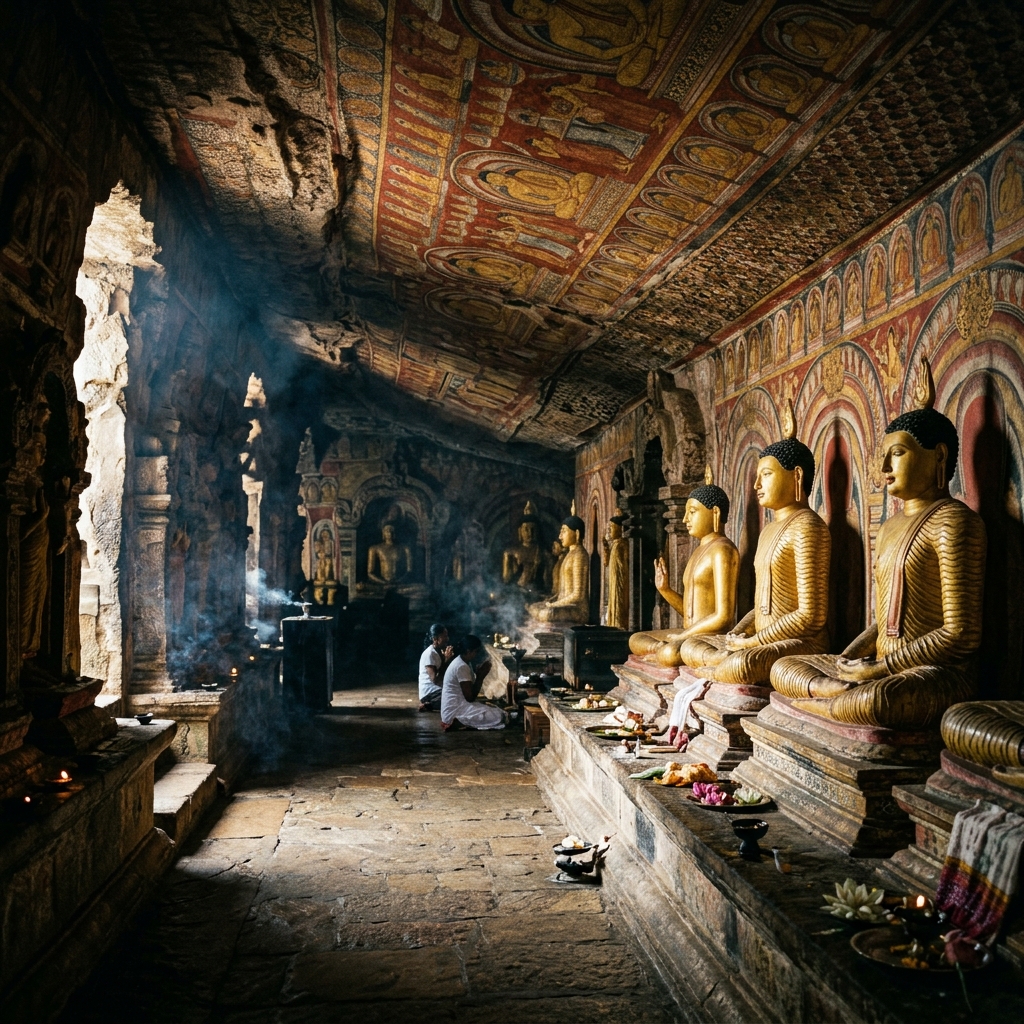
There are ancient places in the world that photographs prepare you for. And there are those that no photograph has ever adequately conveyed — places where the weight of accumulated time, the scale of human ambition, and the quality of silence in a particular morning hour combine to create something beyond the reach of a camera lens.
Sri Lanka's Cultural Triangle is the latter. Concentrated within a small area of the island's north-central heartland, this UNESCO-protected region contains four of the most extraordinary archaeological sites in the world.
At Zelenso Travel, we have guided hundreds of clients through these ancient places. What follows is a handbook for experiencing them properly: at the right hour, in the right sequence, with the depth of knowledge that transforms stone and fresco into living history.
"The Cultural Triangle is not a collection of ruins. It is a civilisation that paused. Walking through it with the right guide is one of the most intellectually and spiritually rich experiences available to a traveller anywhere on earth."— Zelenso Travel, Cultural Triangle Specialists
What Is Sri Lanka's Cultural Triangle?
The Cultural Triangle refers to the geographic region formed by three of Sri Lanka's greatest ancient cities — Anuradhapura in the northwest, Polonnaruwa in the northeast, and Kandy in the south — with Sigiriya and Dambulla at the triangle's heart.
Together, these sites encompass four UNESCO World Heritage designations and represent the full arc of Sri Lankan Buddhist civilisation — from the ancient kingdoms of Anuradhapura (4th century BC) through Sigiriya (5th century AD) to the medieval greatness of Polonnaruwa (12th century AD).
The region's importance extends beyond archaeology. These sites are living places of worship and national identity for Sri Lankan Buddhists — which gives them an atmospheric quality that purely archaeological sites rarely achieve.
Sigiriya Rock Fortress
The Crown Jewel · 5th century AD
A 200-metre volcanic monadnock rising sheer from surrounding jungle. Transformed in 477 AD by King Kassapa I into a royal palace of extraordinary ambition. The summit platform held the palace. The water gardens at the base — fed by a hydraulic system that still partially functions — were among the most sophisticated in the ancient world.
Begin at 6am. The 90-minute ascent passes through formal water gardens, boulder gardens with meditation caves, the famous Sigiriya frescoes (18 surviving celestial figures, 5th-century pigments), the Lion's Paw entrance, and the summit with palace foundations still clearly visible.
💡 Insider Tip: The water gardens are often overlooked by visitors rushing to climb. Spend 30 minutes here first — the ancient hydraulic engineering provides essential context.
Dambulla Cave Temple
2,000 Years of Golden Silence · 1st century BC
Five extraordinary rock-cut caves housing 153 gilded Buddha statues and paintings covering over 2,100 square metres of ceiling and wall. The largest cave — Cave II, the Temple of the Great King — produces a genuine physical reaction of awe upon entry.
No significant climb — elevated walkway to the cave complex.
💡 Insider Tip: Visit 9–11am after Sigiriya. Remove shoes at the base (the path is hot in the afternoon). Located 18km from Sigiriya — easily combined in a single day.
Polonnaruwa
A Lost Medieval Capital · 11th–13th century AD
Sri Lanka's medieval capital — one of the most sophisticated cities in Asia during its peak. A planned urban environment with paved roads, palace complexes, monastic universities, and a system of tanks (artificial reservoirs) that still function today. Best explored by bicycle.
Flat terrain — perfect for cycling. The Gal Vihara: four extraordinary Buddha figures carved from a single granite face. A 15-metre reclining Buddha. The carving precision remains a source of scholarly wonder.
💡 Insider Tip: Explore by bicycle at golden hour (late afternoon). The 5pm light on the ruins is extraordinary for photography. Located ~100km from Sigiriya.
Anuradhapura
The Sacred Capital · 4th century BC – 11th century AD
The oldest and most sacred site — continuously inhabited from the 4th century BC. The city at its peak housed over 100,000 people. Contains monuments rivalling ancient Mediterranean capitals.
The Sri Maha Bodhi: a fig tree planted in 288 BC from a cutting of the original Bodhi tree under which the Buddha achieved enlightenment. The oldest human-planted tree with a documented history on earth.
💡 Insider Tip: The great white stupas — Ruwanwelisaya, Jetavanaramaya, Thuparamaya — are best seen at dawn when they emerge from the morning mist. Located 50km from Sigiriya.
Hidden Gems of the Cultural Triangle
Pidurangala Rock
The underrated alternative to Sigiriya — shorter climb, fewer tourists, and the finest elevated view of Sigiriya Rock itself. At sunset, the rock glows amber. Entrance: ~$3.
Ritigala Forest Monastery
Ruined forest monastery hidden in a wilderness reserve, completely off the tourist circuit. Ancient stone walkways disappear into jungle. Almost no visitors.
Minneriya — The Gathering
July–October: hundreds of Asian elephants converge on Minneriya Tank. One of Asia's largest terrestrial wildlife spectacles. Just 30km from Sigiriya.
Aluvihara Rock Temple
Where monks first committed the Buddhist canon to writing in the 1st century BC. Cave paintings of Buddhist hell realms are among the most vivid in Sri Lanka.
Nalanda Gedige
A unique Hindu-Buddhist hybrid shrine (8th–9th century) between Sigiriya and Kandy. Carved erotic panels on the exterior make it a fascinating and unexpected discovery.
3-Day Cultural Triangle Itinerary
Sigiriya at Dawn + Pidurangala Sunset
Morning: 5:30am departure. Sigiriya climb before crowds. Water gardens. Frescoes gallery. Summit by 7:30am.
Afternoon: Resort recovery. Evening: Pidurangala Rock sunset (5:30pm start).
🏨 Water Garden Sigiriya · From £380/night
Dambulla & Polonnaruwa
Morning: 8am: Dambulla Cave Temple (30 min drive). Five caves before midday heat.
Afternoon: Drive to Polonnaruwa (2 hrs). Ruins by bicycle at golden hour. Gal Vihara in 5pm light.
🏨 Water Garden Sigiriya or Polonnaruwa guesthouse
Anuradhapura (Optional)
Morning: 6am: Dawn drive to Anuradhapura. Great stupas in morning mist. Sri Maha Bodhi tree at pilgrimage hour.
Afternoon: 11am: Drive south toward Kandy or continue itinerary.
🏨 Transit
Luxury Hotels in the Cultural Triangle
Water Garden Sigiriya
From £380/nightBest for: Couples · Honeymooners · Architecture enthusiasts
Seven private pool villas among water gardens and lily ponds echoing Sigiriya's ancient hydraulics. The most architecturally coherent hotel response to the surrounding UNESCO landscape.
Aliya Resort & Spa
From £220/nightBest for: Families · Value-conscious luxury · Larger groups
Beautiful views, large pool, competent spa. Excellent value with strong guiding connections and good food.
Habarana Village by Cinnamon
From £180/nightBest for: Full Cultural Triangle coverage · Safari combination
Reliable mid-luxury lakeside property in the geographic centre of the Cultural Triangle. In-house guides with strong heritage expertise.
Always arrive at dawn — Sigiriya at 6am vs 10am is a completely different experience
Non-slip shoes — wet rock, metal staircases and uneven ancient stone
Minimum 2 litres water per person — heat exhaustion is a real risk
Shoulders and knees covered at all Buddhist sites
Pre-purchase tickets — queues can cost an hour of dawn advantage
Binoculars — invaluable for Sigiriya frescoes detail
Private vehicle essential — poor public transport between sites
30 minutes of pre-travel reading transforms what you see
5 Cultural Triangle Mistakes to Avoid
Visiting Sigiriya after 9am
35°C midday heat and hundreds of visitors bears no resemblance to the same climb at 6am. Dawn is not a preference — it is the experience.
Skipping Polonnaruwa
Both sites are extraordinary and completely different. Polonnaruwa by bicycle at golden hour is consistently ranked equal to Sigiriya.
Using a driver-guide rather than a specialist historian
Sigiriya's frescoes, Polonnaruwa's royal palace, and Anuradhapura's stupas all require deep specialist knowledge. A driver who also guides is not the same as an expert historian.
Underestimating distances
Polonnaruwa is 100km from Sigiriya. Anuradhapura is another 50km. Always clarify all distances with your guide before departure.
Not combining with Minneriya
July–October: hundreds of elephants gather at Minneriya Tank just 30km from Sigiriya. One of Asia's greatest wildlife spectacles.
Frequently Asked Questions
What is Sri Lanka's Cultural Triangle?
How many days do you need?
Is Sigiriya Rock hard to climb?
Sigiriya or Pidurangala — which is better?
What is the entrance fee for Sigiriya?
Can you visit Sigiriya and Dambulla in one day?
About Zelenso Travel
Sri Lanka Cultural Heritage Specialists
Every Cultural Triangle visit includes a verified specialist historian guide, pre-purchased dawn tickets, and a private vehicle throughout.
2,500 Years. Four Extraordinary Sites.
Let Zelenso Travel arrange your private Cultural Triangle journey — specialist historian guides, dawn access, luxury accommodation.